



In Memoriam


Andrzej Kopcewicz (1934-2007)
Prof. dr hab. Andrzej Kopcewicz urodził się w roku 1934 w Lipnie, a dorastał na warszawskiej Pradze, gdzie wraz z matką i siostrą przyszło mu spędzić wojnę. (Ojciec, przed wojną pilot-oblatywacz w Państwowych Zakładach Lotniczych, walczył w tym czasie w RAF.) Anglistykę ukończył na Uniwersytecie Warszawskim, kiedy tylko kierunek ten został otwarty po okresie stalinowskim. Wśród jego nauczycieli znalazł się wówczas m.in. prof. Tadeusz Grzebieniowski, autor pierwszej w języku polskim Historii literatury północno-amerykańskiej, opublikowanej w roku 1935. Po ukończeniu studiów Profesor Kopcewicz został zatrudniony jako asystent w Uniwersytecie Łódzkim, skąd ostatecznie trafił do Instytutu Filologii Angielskiej Uniwersytetu im. Adama Mickiewicza w Poznaniu, gdzie doktoryzował się na podstawie rozprawy pt. „Funkcja obrazu w strukturze wiersza na podstawie wczesnej poezji angloamerykańskiej XX w.”, wydanej drukiem w roku 1969, a wkrótce potem uzyskał habilitację na podstawie monografii pt. Poezja amerykańskiego Południa (1972). (Była to pierwsza w Polsce habilitacja z literatury amerykańskiej.) Najważniejsze osiągnięcie naukowe Profesora to napisana wraz z Martą Sienicką dwutomowa Historia literatury Stanów Zjednoczonych w zarysie (1982, 1983). W latach 1979-1980 oboje zapoczątkowali ponadto regularne, ożywione kontakty z amerykanistami z Europy Środkowej (Czechosłowacja, Węgry) i Zachodniej (Niemcy, Francja, Wielka Brytania). Jego prace późniejsze, zebrane pośmiertnie w tomie pt. From Moby Dick to Finnegans Wake zostały opublikowane w roku 2012.
Zainteresowania naukowe Profesora Kopcewicza obejmowały literaturę amerykańską XIX i XX w. oraz twórczość Jamesa Joyce’a, w tym zwłaszcza Finnegans Wake. (Profesor był jednym z niewielu polskich znawców tej wyjątkowej powieści). Dodać trzeba, iż wynikały one nie tyle z warunków akademickiej kariery, ile z przyjemności, wręcz pasji czytania i mierzenia się z utworami, które stawiają czytelnikowi opór. Dla uczestników jego seminariów magisterskich i doktorantów była to szkoła niemożliwa do przecenienia, przy czym otwartość i życzliwość Profesora dla studentów rysowała się na tle ówczesnego życia uniwersyteckiego wyjątkowo. Prawie nigdy nie odmawiał rozmowy, nie narzucał paraliżującego dystansu i spontanicznie dzielił się swoim doświadczeniem czytelniczym oraz warsztatem badawczym. Polscy amerykaniści darzyli go szczerym szacunkiem, przez lata uznając za środowiskowy autorytet.
Profesor Andrzej Kopcewicz zmarł w roku 2007, dwa lata po przejściu na emeryturę. W pamięci uczniów i przyjaciół zapisał się jako nieodżałowany mentor i partner, osoba autentycznie bliska, wyjątkowa, przekraczająca sztywne ramy konwenansów.
Marek Wilczyński

Krzysztof Michałek (1955-2009)
In Memoriam by Halina Parafianowicz

Andrzej Antoszek (1971-2013)
I first met Andrzej Atoszek in the secondary school, III Liceum Ogólnokształcące in Lublin. We shared a passion for basketball and played on the school’s team. Then, a year apart, we both enrolled in the English program at Maria Curie-Skłodowska University. After graduating, Andrzej went on to work at the Department of English at the Catholic University of Lublin, while I decided to pursue graduate studies at the University of Warsaw.
Andrzej’s research focused on two fields: postmodernism and African American Studies. His doctoral dissertation was devoted to Don DeLillo’s deconstruction of American myths. Andrzej was among the first authors in Poland to publish scholarly as well as popular essays on cyberpunk and avant-pop at a time when these phenomena were still largely unknown to the Polish reading audience. He was a frequent contributor—as author or translator—to literary journals and served as a guest-editor for such established journals as Literatura na Świecie, Akcent and Magazyn Sztuki. He translated into Polish works by Susan Sontag and Robert Coover, among others. Andrzej’s interest in African American Studies resulted in the publication of his co-edited volume of essays entitled Black on White: African Americans Who Challenged America, which remains one of the most comprehensive publications on African American topics available in the Polish language. In 2006, he co-organized an international seminar on African American culture in Puławy; this event provided a strong impulse for a further development of African American Studies in Poland and East-Central Europe.
Andrzej performed his academic duties with utmost professionalism and dedication. The international community of scholars and students was his natural environment: he gave papers and lectures in Europe, the United States, Australia and Japan. Andrzej was about to complete his post-doctoral book titled “Domesticated Narratives. Contemporary Polish Representations of African American Culture: Rap and Hip Hop Lyrics, Moving Pictures and Other Stories,” and asked me to review the manuscript. We agreed on the dates. The manuscript never arrived.
Marek Paryż

Piotr Dziedzic (1948-2018)
Piotr Dziedzic was a prominent scholar of US American literature and one of the foremost Polish experts on Thomas Pynchon. A beloved teacher, trustworthy colleague, and great erudite, he was a man of impeccable manners and strong convictions. Throughout his academic career he was a cherished member of the closely-knit academic community of the Institute of British and American Cultures and Literatures of the University of Silesia in Katowice as well as chair of English Studies at the Faculty of Humanities of the Silesian School of Economics and Languages in Katowice. Piotr Dziedzic received his doctoral degree from the University of Warsaw (1988), and his postdoctoral degree from the University of Silesia (2004) on the basis of his monograph At the Corner of Liberty and Main: John Gardner, Raymond Carver, and the Generation of ’31 (Wydawnictwo Uniwersytetu Śląskiego, Katowice 2002). Professor Dziedzic left an indelible mark on several generations of students, as well as scores of academics who had the pleasure of working with him at the University of Silesia.
Małgorzata Poks

Michał J. Rozbicki (1946-2019)
While the Polish Association for American Studies is in the middle of the fourth decade of its successful existence, fewer and fewer of the current members are familiar with the name and person of PAAS founding President Professor Michał Jan Rozbicki. He passed away prematurely in 2019, but those of us privileged to ever have worked with him cannot help the feeling that the Association has always been inspired by the standards and goals he envisioned for it from the start.
Prof. Rozbicki’s academic career was marked by institutional mobility that brought him in touch with different cultural and intellectual milieus. He earned his Ph.D. at Maria Curie-Skłodowska University in Lublin in 1975, where he also lectured before joining the English Department of the University of Warsaw in 1976. He pursued advanced study at Johns Hopkins University for a year, and in 1990-1992 was a visiting professor at Indiana University in Bloomington. Hit by a Cupid’s arrow while researching at the Huntington Library, he made a new home with wife Jody in America and began a second prolific career at the Department of History of St. Louis University in 1992. His research soon resulted in the publication of The Complete Colonial Gentleman: Cultural Legitimacy in Plantation America (1998) followed by the award-winning Culture and Liberty of the Age of the American Revolution (2011).
An important trait of Prof. Rozbicki’s scholarship was interdisciplinarity. His first degree in English became a springboard to studies in the cultural history of seventeenth-century England and then of colonial America. His ultimate fascination were mechanisms of interaction between cultures and developing innovative methodologies of interpreting them. He edited three collections of essays by international contributors exploring various aspects of interculturality: Cross-Cultural History and the Domestication of Otherness (2011), Perspectives on Interculturality: The Construction of Meaning in Relationships of Difference (2015), and Human Rights in Translation: Intercultural Pathways (2018).
He was equally committed as an administrator whose natural managerial and interpersonal skills allowed him to successfully serve as Deputy Director of the Institute of English Studies (1979-82) and Director of the American Studies Center (1989-90) of the University of Warsaw, as well as Chair of the SLU Department of History (2007-10) and the SLU Center for Intercultural Studies (2011-2018) he himself initiated. At the same time he effectively supervised several doctoral candidates and mentored many graduate students during his tenure at Polish and American universities.
The themes and topics researched by today’s PAAS scholars differ from what they were in the Association’s early years, but Prof. Michał Rozbicki would no doubt be proud today of the high academic standards, openness across disciplines and international prestige of the institution he himself helped create.
Irmina Wawrzyczek

Justyna Kociatkiewicz (1970-2019)
I do not remember where and when I first met Justyna Kociatkiewicz, but it could have been at the PAAS conference in Toruń in 2000, as it was the first conference at which we both delivered papers. Whenever it was exactly, to me, that moment marked the beginning of a personal and professional friendship that lasted despite our infrequent meetings. Justyna worked then as a lecturer at the Department of English, University of Wrocław, where she subsequently took the position of as assistant professor after completing her Ph.D. She was a person one would take to right away—polite, unassuming and with a great sense of humor, in a word, charming. Over the years, we had countless conversations about all kinds of topics: academia, literature, family and life in general. Justyna was an attentive and empathetic listener. She had a true passion for literature; I remember a fascinating conversation she had with another colleague about the fiction of Teodor Parnicki, after which I started reading Parnicki’s novels.
Justyna Kociatkiewicz’s research interests focused on American fiction of the second half of the twentieth and early twenty-first century. Her doctoral dissertation, which she wrote in part during a Fulbright term at the University of California, Berkeley, was devoted to Saul Bellow, and it was published in book form under the title Towards the ‘Antibildungsroman’: Saul Bellow and the Problem of the Genre by Peter Lang (2008). Justyna’s post-doctoral book project examined constructions of history in American postmodern fiction, with a focus on conspiracy narratives, and she published several articles on Don DeLillo and Robert Coover. I had the honor and pleasure of working with Justyna on two book projects for which she wrote essays, and this allowed me to appreciate her excellence as a writer. I think that her style of writing—admirably lucid and precise—said a lot about her personality, especially her integrity, dependability, sense of commitment and respect for others. She co-organized two PAAS conferences in Wrocław—in 2002 and 2013—and co-edited two respective post-conference publications: Traveling Subjects: American Journeys in Space and Time (with Dominika Ferens and Elżbieta Klimek-Dominiak, Rabid, 2004) and Eating America: Crisis, Sustenance, Sustainability (with Laura Suchostawska and Dominika Ferens, Peter Lang, 2014).
For a long time, Justyna struggled with a serious illness. She stopped coming to PAAS conferences, and her friends knew about her repeated leaves from teaching. But we took it for granted that one day she would simply be back. The information about Justyna’s passing came as a shock in a deeply existential sense.
Marek Paryż

Franciszek Lyra (1932-2021)
Born in 1932, Dr. Franciszek Lyra specialized in the history of American literature. A graduate of the Institute of English Studies of the University of Warsaw, he completed his Ph.D. in linguistics at Indiana University, Bloomington.
He was the first Polish Fulbright grantee, in 1959. After he completed his Ph.D., he returned to Poland and, starting from 1962, helped establish the English Department at Maria Curie-Skłodowska University in Lublin where he taught until 1969. He subsequently taught at the University of Warsaw, the Institute of English Studies and the American Studies Center.
His research was focused on the history of American literature, the reception of American literature in Poland, and on literary connections between both countries. Dr. Lyra was an author of two books—William Faulkner published by Wiedza Powszechna in 1966 and Edgar Allan Poe by the same press in 1973—as well as a dozen articles published in Polish and American journals. In 2011 he was awarded the Distinguished International Service Award (2011) from Indiana University. He founded the Polish chapter of the Indiana University Alumni and Friends Association at the University of Warsaw.
Małgorzata Durska, Tomasz Basiuk and Grzegorz Kość
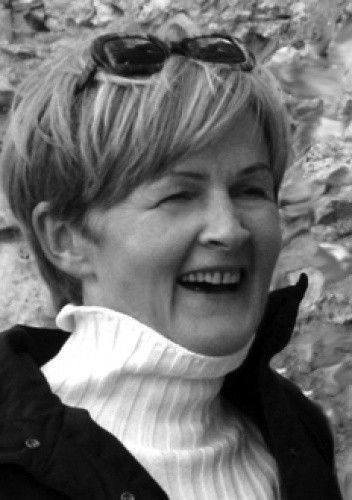
Elżbieta Oleksy (1946-2026)
Pani prof. dr hab. Elżbiety H. Oleksy była wybitną naukowczynią i oddaną organizatorką życia akademickiego. WspółtworzyłaWydział Studiów Międzynarodowych i Politologicznych Uniwersytetu Łódzkiego i była jego pierwszą Dziekanką – funkcję tę pełniła przez dwie kadencje, w latach 2000-2008. Wcześniej, w 1992 roku, założyła Ośrodek Naukowo-Badawczy Problematyki Kobiet UŁ – pierwszą tego rodzaju jednostkę nie tylko w Polsce, ale w całej Europie Środkowej i Wschodniej – oraz Katedrę Amerykanistyki i Mass Mediów UŁ. Katedra stała się wiodącą instytucją interdyscyplinarnych badań amerykanistycznych w Polsce, ciesząc się uznaniem także poza granicami kraju. Pani Profesor Oleksy była jej wieloletnią kierowniczką. W latach 1993-1996 należała do Zarządu Polskiego Towarzystwa Badań Amerykanistycznych w funkcji wiceprezeski.
Znaczenie Pani Profesor Elżbiety Oleksy w świecie nauki potwierdzały liczne funkcje i wyróżnienia. Była promotorką doktoratu honoris causa Uniwersytetu Łódzkiego dla José Manuela Durão Barroso, przewodniczącego Komisji Europejskiej. Uczestniczyła jako recenzentka w postępowaniach o tytuł distinguished professor na uczelniach amerykańskich: Roosevelt University, State University of New York w Buffalo orazOklahoma State University. Zasiadała w radach naukowych prestiżowych serii wydawniczych i czasopism, a jej działalność na tym polu przyczyniała się do wzmacniania międzynarodowej rozpoznawalności łódzkiego ośrodka. W 2007 roku zainicjowała serię książkową „American Studies and Media” w wydawnictwie Peter Lang i objęła funkcję jej redaktorki naczelnej. Pani Profesor Oleksy realizowała prestiżowe projekty badawcze, w tym trzyletni grant MNiSWoraz grant Komisji Europejskiej na badania w Rutgers University w USA.
Była cenioną wykładowczynią i życzliwą mentorką młodych naukowczyń i naukowców. Wypromowała dziewięć doktoratów z zakresu amerykanistyki i gender studies. Pozostawiła po sobie nie tylko bogaty dorobek naukowy, obejmujący prace z zakresu studiów feministycznych, obywatelstwa, wielokulturowości i mediów, lecz także trwałe instytucjonalne dziedzictwo.
Paulina Matera